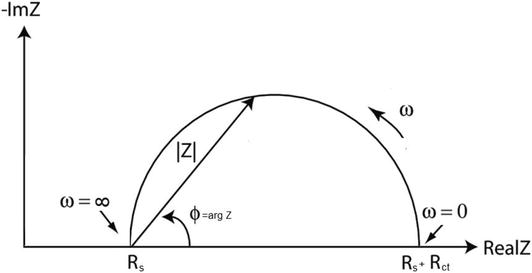
Corrosion monitoring using EIS and polarization techniques

Corrosion monitoring using EIS and polarization techniques
See more posts about EIS and polarization tests Click Here for AI-Powered Spectra Prediction & Professional Test Results Analysis The corrosion mechanism taking place in an aqueous phase with or without mechanical contact is electrochemical in nature. The electrochemical signal is one of the primary sources of information that relates to behavior in potential, curr...
Read more
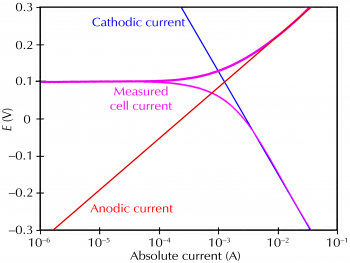
How to analyze polarization curves?

How to analyze polarization curves?
See more posts about the polarization test Click Here for AI-Powered Spectra Prediction & Professional Test Results Analysis Most metallic corrosion occurs via electrochemical reactions at the interface between the metal and an electrolyte solution. For example, a thin film of moisture on a metal surface forms the electrolyte for atmospheric corrosion. A second exa...
Read more

Fundamentals of Zeta Potential Analysis

Fundamentals of Zeta Potential Analysis
Click here to see more posts about zeta potential/DLS Click Here for AI-Powered Spectra Prediction & Professional Test Results Analysis Introduction The physical properties of colloids (nanoparticles) and suspensions are strongly dependent on the nature and extent of the particle-liquid interface. The behavior of aqueous dispersions between particles and liquid ...
Read more

How to analyze Dynamic Light Scattering (DLS) results

How to analyze Dynamic Light Scattering (DLS) results
Click here to see more posts about zeta potential/DLS Click Here for AI-Powered Spectra Prediction & Professional Test Results Analysis Dynamic light scattering (DLS), which is also known as photon correlation spectroscopy (PCS) or quasi-elastic light scattering (QLS), is a spectroscopy method used in the fields of chemistry, biochemistry, and physics to ...
Read more