Only 10$ for interpretation of your BET results

Payment Upon Completion
Send your results...
Introduction to BET (Brunauer, Emmett and Teller)
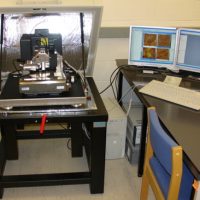
By BET (Brunauer, Emmett and Teller) the specific surface area of a sample is measured – including the pore size distribution. This information is used to predict the dissolution rate, as this rate is proportional to the specific surface area. Thus, the surface area can be used to predict bioavailability. Further it is useful in evaluation of product performance and manufacturing consistency.
Only 15$ for interpretation of your NMR spectrum
Payment Upon Completion
Send your results...
NMRshiftdb
NMRshiftdb2 is a NMR database (web database) for organic structures and their nuclear magnetic resonance (nmr) spectra. It allows for spectrum prediction (13C, 1H and other nuclei) as well as for searching spectra, structures and other properties. The nmrshiftdb2 software is open source, the data is published under an open content license. The core of nmrshitdb2 are fully assigned spectra with raw data and peak lists (we have pure peak lists as well). Those datasets are peer reviewed by a board of reviewers. The project is supported by a scientific advisory board.
Only 8$ for interpretation of your zeta potential results
Payment Upon Completion
Send your results...
Introduction
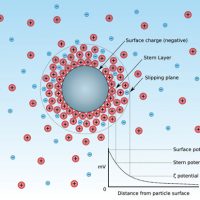
The physical properties of colloids (nanoparticles) and suspensions are strongly dependent on the nature and extent of the particle-liquid interface. The behavior of aqueous dispersions between particles and liquid is especially sensitive to the ionic and electrical structure of the interface.
Only 8$ for interpretation of your DLS results
Payment Upon Completion
Send your results...
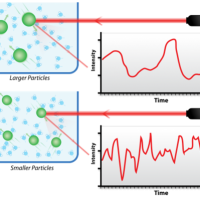
Dynamic light scattering (DLS), which is also known as photon correlation spectroscopy (PCS) or quasi-elastic light scattering (QLS), is a spectroscopy method used in the fields of chemistry, biochemistry, and physics to determine the size distribution of particles (polymers, proteins, colloids, etc.) in solution or suspension. In the DLS experiment, normally a laser provides the monochromatic incident light, which impinges onto a solution with small particles in Brownian motion.
Only 15$ for interpretation of your NMR spectrum
Payment Upon Completion
Send your results...
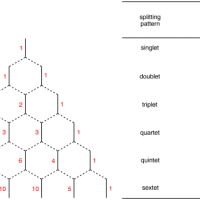
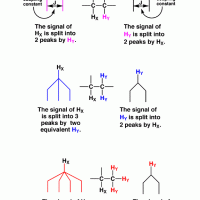
Nuclear Magnetic Resonance (NMR) interpretation plays a pivotal role in molecular identifications. As interpreting NMR spectra, the structure of an unknown compound, as well as known structures, can be assigned by several factors such as chemical shift, spin multiplicity, coupling constants, and integration. This Module focuses on the most important 1H and 13C NMR spectra to find out structure even though there are various kinds of NMR spectra such as 14N, 19F, and 31P. NMR spectrum shows that x- axis is chemical shift in ppm. It also contains integral areas, splitting pattern, and coupling constant.
Only 15$ for interpretation of your NMR spectrum
Payment Upon Completion
Send your results...
This handout relates the basic theory of NMR described on the theory web handout with spectra of real molecules and how to deduce structure from the spectra. Before reading this handout, you need to be thoroughly familiar with all of theory concepts that were described.
Only 10$ for interpretation of your BET results
Payment Upon Completion
Send your results...
Introduction
In the past few years, nanotechnology research has expanded out of the chemistry department and into the fields of medicine, energy, aerospace and even computing and information technology. With bulk materials, the surface area to volume is insignificant in relation to the number of atoms in the bulk, however when the particles are only 1 to 100 nm across, different properties begin to arise. For example, commercial grade zinc oxide has a surface area range of 2.5 to 12 m2/g while nanoparticle zinc oxide can have surface areas as high as 54 m2/g . The nanoparticles have superior UV blocking properties when compared to the bulk material, making them useful in applications such as sunscreen. Many useful properties of nanoparticles rise from their small size, making it very important to be able to determine their surface area.
Only 10$ for interpretation of your VSM curve
Payment Upon Completion

 Send your VSM curves...
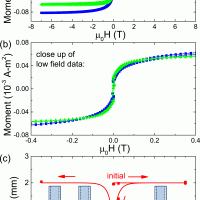
Increasing media storage density continues to be a very active area of research. Magnetic media may be divided into particulate and continuous media.
Particulate media are comprised of small magnetic particles bonded on a plastic tape or disk, the thickness of the magnetic overcoat is typically on the order of 10,000 Å. Since these are single domain particles, the information is stored by inverting the magnetization of some of the particles. Continuous media are metallic thin films, typically a few hundred angstroms in thickness. Particulate media are advantageous in that they are relatively simple to prepare and are chemically stable, however their recording density is relatively low.
Only 8$ for interpretation of your EDS spectrum
and 10$ for interpretation of your SEM/TEM micrograghsPayment Upon Completion
Send your results...
What is EDS?
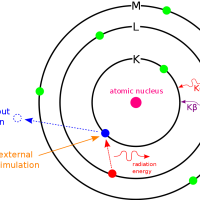
Energy-dispersive X-ray spectroscopy (also known as EDS, EDX, or EDXA) is a powerful technique that enables the user to analyze the elemental composition of a desired sample. The major operating principle that allows EDS to function is the capacity of high energy electromagnetic radiation (X-rays) to eject ‘core’ electrons (electrons that are not in the outermost shell) from an atom. This principle is known as Moseley’s Law, which determined that there was a direct correlation between the frequency of light released and the atomic number of the atom.
Only 10 $ for interpretation of each element in your XPS spectrum
Payment Upon Completion

Send your spectra...
XPST
XPST is a program package for the analysis of X-ray Photoelectron Spectroscopy (XPS) data. It includes various graphical interfaces as well as commandline functions to facilitate the workup of XPS data.