BET and its application in adsorption monitoring

INTERPRETATION AND ANALYSIS OF BET RESULTS
Click Here for AI-Powered Spectra Prediction & Professional Test Results Analysis Adsorption is a process where a solid or liquid substance is attracted and held onto the surface of another material. It is an essential process in many industries, including water treatment, food processing, and pharmaceuticals. The effectiveness of adsorption depends on the properties ...
Read more
Quantitative Rietveld analysis in batch mode with Maud

Quantitative Rietveld analysis in batch mode with Maud
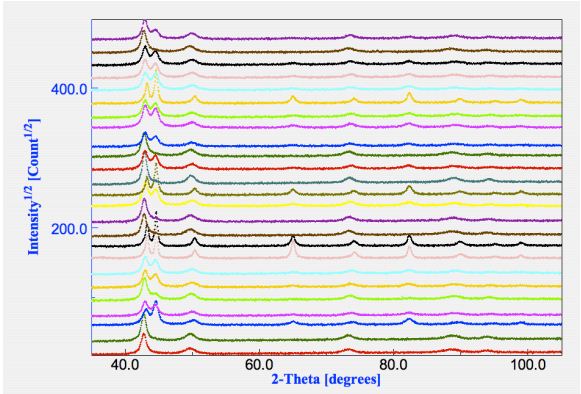
Click here to see other posts about XRD Click Here for AI-Powered Spectra Prediction & Professional Test Results Analysis 1. Introduction Today several instruments for fast spectra recording are available. In most cases the difficultyis to process and analyze the data quickly in a reliable way. The Maud program, in one of itsmany undocumented features, can be us...
Read more

Free software for EDS analysis

Click here to see other posts about EDS Click Here for AI-Powered Spectra Prediction & Professional Test Results Analysis 1- DTSA-II DTSA-II is a multi-platform software package for quantitative x-ray microanalysis. DTSA-II was inspired by the popular Desktop Spectrum Analyzer (DTSA) package developed by Chuck Fiori, Carol Swyt-Thomas, and Bob Myklebust at NIST ...
Read more

What is Raman spectroscopy?

What is Raman spectroscopy?
Click here to see other posts about Raman Click Here for AI-Powered Spectra Prediction & Professional Test Results Analysis In this course the general introduction to Raman spectroscopy and microscopy will be provided and practical tips as well as examples will be given. The capability of Raman spectroscopy for the analysis of real-life samples (paint components, ...
Read more

How EDS works?

How EDS works?
Click here to see other posts about EDS Click Here for AI-Powered Spectra Prediction & Professional Test Results Analysis Interaction of an electron beam with a sample target produces a variety of emissions, including x-rays. An energy-dispersive (EDS) detector is used to separate the characteristic x-rays of different elements into an energy spectrum, and EDS...
Read more

Fundamentals of Energy-dispersive X-ray spectroscopy (EDS)

Fundamentals of Energy-dispersive X-ray spectroscopy (EDS)
Click here to see other posts about EDS Click Here for AI-Powered Spectra Prediction & Professional Test Results Analysis X-ray is a kind of electromagnetic wave, the same as light. The wavelength of visible light is 400 to 800nm, while the wavelength of x-ray is much shorter (higher energy), at 0.001nm to 10nm, and is known to have strong penetrating power. ...
Read more

Interpretation steps of a NMR spectrum

Interpretation steps of a NMR spectrum
Click here to see more posts about NMR Click Here for AI-Powered Spectra Prediction & Professional Test Results Analysis Nuclear Magnetic Resonance (NMR) spectroscopy is an incredibly powerful tool for characterizing molecular structures. When submitting to the FDA or other regulatory agencies, full structural characterization by NMR provides crucial evidence of co...
Read more

Fundamentals of Nuclear Magnetic Resonance Spectroscopy

Fundamentals of Nuclear Magnetic Resonance Spectroscopy
Click here to see more posts about NMR Click Here for AI-Powered Spectra Prediction & Professional Test Results Analysis Over the past fifty years nuclear magnetic resonance spectroscopy, commonly referred to as nmr, has become the preeminent technique for determining the structure of organic compounds. Of all the spectroscopic methods, it is the only one for w...
Read more

A to Z of Atomic force microscopy (AFM)

A to Z of Atomic force microscopy (AFM)
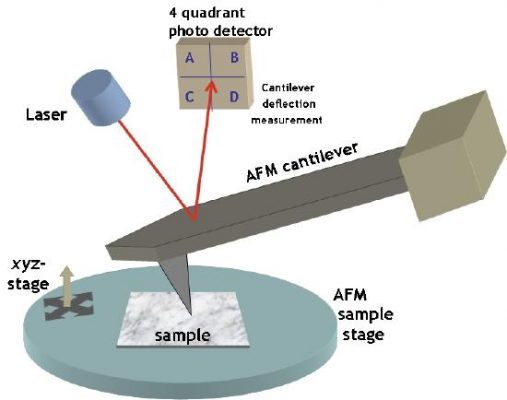
Click here to see other posts about AFM Click Here for AI-Powered Spectra Prediction & Professional Test Results Analysis Atomic force microscopy (AFM) is a technique with multiple applications in biology. This method is a member of the broad family of scanning probe microscopy and was initially developed in 1986 by Binnig et al to overcome the disadvantages of the...
Read more

Vibrating Sample Magnetometry (VSM), A review

Vibrating Sample Magnetometry (VSM), A review
Click here to see more posts about VSM Click Here for AI-Powered Spectra Prediction & Professional Test Results Analysis Vibrating Sample Magnetometry (VSM) is a measurement technique which allows todetermine the magnetic moment of a sample with very high precision. The aim of thislab course M106 is to enlarge upon the use of this widespread technique introduced in...
Read more