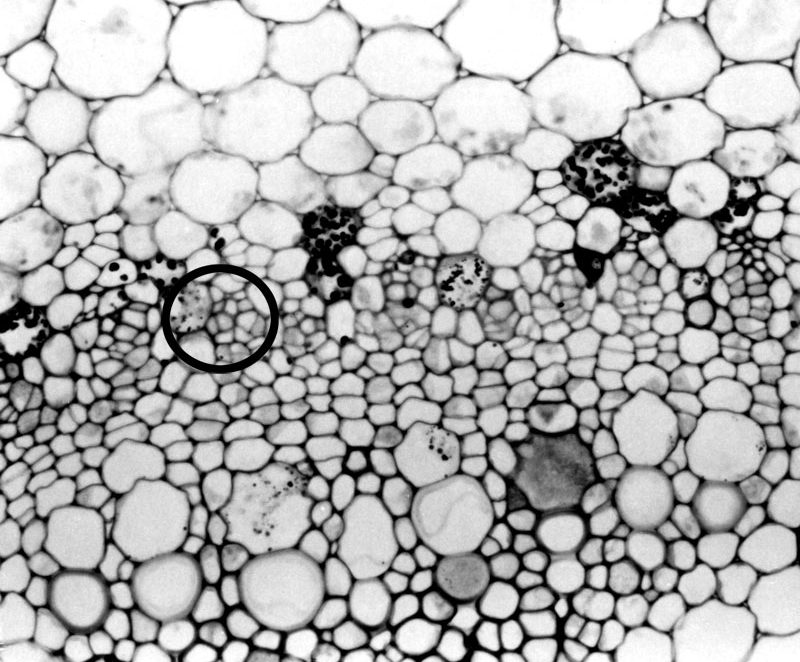
What are the main differences between an SEM, an ESEM, an SEM-FIB and an (S)TEM?

What are the main differences between an SEM, an ESEM, an SEM-FIB and an (S)TEM?
Click here to see other posts about SEM Click Here for AI-Powered Spectra Prediction & Professional Test Results Analysis The Scanning Electron Microscope (SEM) produces images by probing the specimen with a focused electron beam that is scanned across a rectangular area of the specimen (raster scanning). (more…)
Read more

Fundamentals of Zeta Potential Analysis

Fundamentals of Zeta Potential Analysis
Click here to see more posts about zeta potential/DLS Click Here for AI-Powered Spectra Prediction & Professional Test Results Analysis Introduction The physical properties of colloids (nanoparticles) and suspensions are strongly dependent on the nature and extent of the particle-liquid interface. The behavior of aqueous dispersions between particles and liquid ...
Read more

How to analyze Dynamic Light Scattering (DLS) results

How to analyze Dynamic Light Scattering (DLS) results
Click here to see more posts about zeta potential/DLS Click Here for AI-Powered Spectra Prediction & Professional Test Results Analysis Dynamic light scattering (DLS), which is also known as photon correlation spectroscopy (PCS) or quasi-elastic light scattering (QLS), is a spectroscopy method used in the fields of chemistry, biochemistry, and physics to ...
Read more

A to Z of scanning electron microscopy (SEM)

Click here to see other posts about SEM Click Here for AI-Powered Spectra Prediction & Professional Test Results Analysis The scanning electron microscope (SEM) uses a focused beam of high-energy electrons to generate a variety of signals at the surface of solid specimens. The signals that derive from electron-sample interactions reveal information about...
Read more